
Well Child Visits Schedule
Schedule of Visits
3-5 Days
Congratulations! Your baby is finally here. Newborns are wonderful, but exhausting! Having friends or family around to provide extra help and support can be very helpful. Make sure all visitors wash their hands well. Your baby’s first visit to our office takes place during his or her first week of life, usually 1-2 days after you are discharged from the hospital.
We do a lot at this visit, including:
- Check your baby’s weight.
- Monitor for signs of jaundice.
- Check to see how your baby is feeding.
- Answer questions about your new baby.
- Check to make sure everyone at home is adjusting well to the new member of the family
Immunizations:
- None
Tests/Screens/Assessments:
- Follow up on newborn screen
Helpful Info:

2 Week Visit
The 2 Week Visit (sooner if you have concerns!) is a time to talk about how your family is acclimating to the newest addition. Feeding, bowel habits and sleeping are common topics. If you are breastfeeding, you can ask to meet with our Lactation Consultants for personalized breastfeeding assistance. Babies usually lose weight right after birth. By 2 weeks of age, your baby will likely have regained his or her birth weight. Please remember that it is important to always put your baby to sleep on his or her back in a flat, firm and separate sleep space (bassinet, crib, etc.) to reduce the risk of SIDS. As always, we are here to answer questions and offer anticipatory guidance.
We do a lot at this visit, including:
- Measure your baby’s weight, length and head size and record on a growth curve.
- Remind you to give your baby a daily supplement of 400 IU of vitamin D drops if you are breastfeeding.
Prior to this visit, please complete the
Edinburgh Postnatal Depression Scale and bring it with you to the exam
Finally, remember to call us immediately if your baby has a temperature greater than 100.4 degrees F.
Immunizations:
- None
Tests/Screens/Assessments:
- Post Partum Depression Screen- EPDS
- Edinburgh Postnatal Depression Scale
Helpful Info:
2 Month Visit
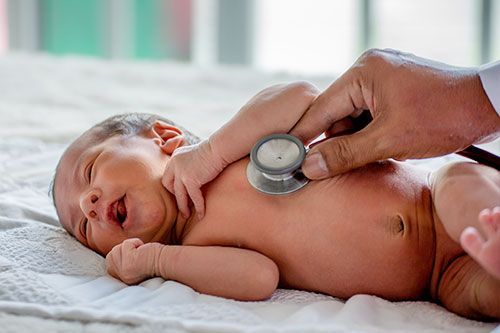
Many babies seem more fussy or colicky at this age. Be patient. Colicky babies eventually outgrow their crying phase. Keeping your baby safe is the most important thing you can do. Even if you feel frustrated, handle your baby gently and reach out for help to friends, relatives or your pediatrician if the crying is getting to be too much. If you need a break and no one is available to help you, place your baby on his/her back gently in a safe space, such as a crib or bassinet and take a few minutes to calm down. Also, your baby is more mobile than you think - infants are very top-heavy and where the head goes, the rest of the body will follow. Therefore, always have a hand on your child on high surfaces (beds, couches, changing tables).
We do a lot at this visit, including:
- Measure your baby’s weight, length and head size and record on a growth curve.
- Provide your baby’s first set of immunizations. Immunizations are safe, effective and keep your child and our community healthy. During this visit, you will be able to discuss any questions you may have about immunizations.
Nutrition: Only breast milk or formula - no cereal, water, or juice.
Elimination Stools should still be very soft and not formed, but can occur less frequently (every few days).
Pain Control and Other Medications Tylenol can be given for pain or fever, but no other over-the-counter medications are recommended at this age.
Sleep It's quite normal for an infant to still wake in the night to feed.:
Immunizations:
Helpful Info:

4 Month Visit
Your baby is becoming more active, verbal and fun, providing more positive feedback than ever before. Be careful not to leave your baby unattended, especially on a bed, couch or counter. They move faster than you think!
Babies need only breast milk or iron fortified formula for the first 4-6 months of life. We will talk at this appointment about the appropriate time to introduce solid foods and what foods to introduce first.
We do a lot at this visit, including:
- Measure your baby’s weight, length and head size and record on a growth curve.
- Provide your baby’s immunizations.
Nutrition: We'll discuss when to introduce cereals. Breastfed babies that get less than 16oz of formula still need Vitamin D drops.
Elimination Stools should still be very soft and not formed.
Pain Control and Other Medications Tylenol can be given for pain or fever, but no other over-the-counter medications are recommended at this age.
Sleep It's quite normal for an infant to still wake in the night to feed, but we will discuss sleep training to help your child become a better sleeper.
Development Your baby should grab objects and place them in his or her mouth, smile and laugh, and not experience any crossing of the eyes (the color of which should now be permanent).
Immunizations:
Helpful Info:

6 Month Visit
Six months can be such a fun age as your baby is much more reactive to you, has a schedule, and can't get into too much trouble on their own, That being said, your baby will begin to move more, so now is the time to start baby-proofing your house - if you haven't already done so. You should move the mattress in your baby's crib down to the lowest level.
We do a lot at this visit, including:
- Measure your baby’s weight, length and head size and record on a growth curve.
- Provide your baby’s immunizations.
Nutrition: We'll discuss how to introduce solid foods. Remember to keep meal times pleasant and free of pressure/disappointment.
- You can slowly introduce infant fruits, vegetables, meats, nut butters and egg products (unless directed otherwise by your doctor).
- By 7 months, the feeding schedule should look like this: baby wakes up – bottle/breastfeed – play time - breakfast – nap – bottle/breastfeed – play time - lunch – nap – bottle/breastfeed - play time – dinner – play time - bottle/breastfeed – bed.
- You can begin to introduce water in a sippy cup (no more than 2-4 oz per day).
- Introduce whole milk yogurt at 8 months (avoiding ones that are high sugar).
- Introduce finger foods when your baby uses a pincer grasp.
- Breastfed babies (<16 oz of formula per day) still need 400 IU of Vitamin D supplementation per day.
Elimination: Stools may become thicker as you introduce foods but should still remain very soft (peanut butter consistency at the thickest).
Pain Control and Other Medications: Tylenol or ibuprofen can be given for pain or fever, but no other over-the-counter medications are recommended at this age.
Sleep: At this point, it is reasonable to expect your baby to self-soothe to sleep and then sleep through the night. Due to safety concerns, there should be no blankets or stuffed animals in your child's crib.
Development: Your baby should pass objects from hand to hand, localize sounds, blow rasberries, play with his or her feet, roll over, and tripod (place one hand in front while sitting to prevent falling forward).
Immunizations:
- DTaP#3
- HIB#3
- IPV#3
- PCV#3
- Rotavirus#3
- Influenza vaccine (during flu season)
Helpful Info:

9 Month Visit
Your baby may be starting to crawl, pulling to a stand and cruising on furniture. Babies will want to touch everything - this is how they learn. This is a messy time! Have fun and be patient.
We do a lot at this visit, including:
- Measure your baby’s weight, length and head size and record on a growth curve.
- Provide scheduled immunizations
Nutrition: As your baby gets better at eating solid/finger foods, you can give them more food from your plate - remember, your goal is to eventually have everyone eat the same meal. Don't be afraid to introduce more complex flavors and keep in mind that a child may need to experience a taste or texture more than 20 times before they figure out if they like it or not . Remember to keep meal times pleasant and free of pressure/disappointment.
- The feeding schedule should roughly look like this: baby wakes up – bottle/breastfeed – play time - breakfast – nap – bottle/breastfeed – play time - lunch – nap – bottle/breastfeed -play time – dinner – play time - bottle/breastfeed – bed.
- You can begin to introduce water in a sippy cup (no more than 2-4 oz per day). Introduce whole milk yogurt at 8 months (avoiding ones that are high sugar) and finger foods when your baby uses a pincer grasp.
- Breastfed babies (<16 oz of formula per day) still need 400 IU of Vitamin D supplementation per day.
- No raw honey
Elimination: Stools may become thicker and more gross as you introduce foods but should still remain very soft (peanut butter consistency at the thickest).
Pain Control and Other Medications Tylenol or ibuprofen can be given for pain or fever, but no other over-the-counter medications are recommended at this age.
Sleep:
t is reasonable to expect your baby to self-soothe to sleep and then sleep through the night. Due to safety concerns, there should be no blankets or stuffed animals in your child's crib.
Development Your child will continue to interact more with their environment and do the following:
- Your baby should sit well.
- Roll easily.
- Make repetitive sounds (ga-ga-ga-ga, da-da-da-da, etc.).
- Experience stranger anxiety.
- Easily support their weight while standing,
- Respond to their name.
- Explore toys and their environment with both hands (let your doctor know if they are developing a preference for one hand or another).
Safety: At this point, you need to have an eye on your child at all times as their skills in finding trouble are improving and they have no sense of physical danger. You can use sunscreen and insect repellent at this age. Never leave a child unattended in the bathtub and keep them facing backwards in a car seat. Discipline consists of redirection and distraction.:
Immunizations:
- no regularly scheduled vaccines. Flu and COVID may be given if seasonally appropriate and desired.
Helpful Info:

1 Year Visit
Your child is very curious, impulsive, and a quick learner and is thus able to find trouble very quickly. Safety beomes a bigger challenge and will require that you try to stay one step ahead by baby-proofing at home. Your child is a natural learner and needs toys, household objects, and people talking them to learn - not screens. Most babies need 3 meals, 2-3 snacks per day, and no more than 16-20 ounces of whole cow's milk per day. Your baby will be able to eat many of the foods you eat, but be careful to avoid small, hard foods that can cause choking.
It is time to wean your child from the bottle and offer all liquids in a sippy cup. It is much easier to wean your child now than if you wait until they are older. Avoid cavities and additional tears and make the change now!
Your baby will be outgrowing the infant carrier car seat. Continue to have your baby in a rear facing car seat until beyond age 2.
We do a lot at this visit, including:
- Measure your baby’s weight, length and head size and record on a growth curve.
- Provide your baby’s immunizations.
- Discuss dental health and may apply fluoride varnish to your baby’s teeth.
- Screen your baby for vision abnormalities with our photoscreening device.
- Test your child for lead exposure and anemia.
Nutrition: At this age, your baby can transition from breast milk or formula to cow’s milk. However, it is healthy to continue breast milk, if that is what you prefer for your baby. Remember to keep meal times pleasant and free of pressure/disappointment. Expect daily differences in what and how much your child wants to eat each day and don't panic if they don't seem hungry.
- There are no dietary restrictions except that you want to watch for choking foods. Push whole grain foods and lots of fruits and vegetables.
- If transitioning to whole milk, aim for 20 to 24 oz per day
- Breastfed babies (<16 oz of formula per day) still need 400 IU of Vitamin D supplementation per day.
- No raw honey
Elimination: Stools may become thicker and more gross as you introduce foods but should still remain very soft (peanut butter consistency at the thickest).
Pain Control and Other Medications Tylenol or ibuprofen can be given for pain or fever, but no other over-the-counter medications are recommended at this age.
Sleep:
t is reasonable to expect your baby to self-soothe to sleep and then sleep through the night. Due to safety concerns, there should be no blankets or stuffed animals in your child's crib. Children often wean themselves to one longer afternoon nap per day.
Development Your child will continue to interact more with their environment and do the following:
- Exhibit a lot of mobility by crawling around and pulling up on objects or walking.
- Wave, clap, and point.
- Have one or two words (may only be understood by the parents).
- Experience stranger anxiety.
- Finger feed themselves.
- Imitate gestures.
- Explore toys and their environment with both hands (let your doctor know if they are developing a preference for one hand or another).
Safety: At this point, you need to have an eye on your child at all times as their skills in finding trouble are improving and they have no sense of physical danger. You can use sunscreen and insect repellent at this age. Never leave a child unattended in the bathtub and keep them facing backwards in a car seat. Discipline consists of redirection and distraction. Time outs don't work yet and spanking/slaps on the hands don't work in the long-term.:
Immunizations:
- HepA#1
- PCV#4
- MMR#1
- Influenza vaccine (during flu season)
Tests/Screens/Assessments:
- Lead Test
- Hemoglobin Test
- Fluoride Varnish
- Vision Photoscreen
Helpful Info:

15 Month Visit
Your child is very curious, impulsive, and a quick learner and is thus able to find trouble very quickly. Safety beomes a bigger challenge and will require that you try to stay one step ahead by baby-proofing at home. Your child is a natural learner and needs toys, household objects, and people talking them to learn - not screens.
Your child should continue to ride in a rear facing car seat until beyond age 2.
We do a lot at this visit, including:
- Measure your baby’s weight, length and head size and record on a growth curve.
- Provide your baby’s immunizations.
Nutrition: Most toddlers need 3 meals, 2-3 snacks per day, and no more than 20-24 ounces of whole cow's milk per day. Your baby will be able to eat many of the foods you eat, but be careful to avoid small, hard foods that can cause choking, and cut up spongy foods like meats and string cheese. Remember to keep meal times pleasant and free of pressure/disappointment. Expect daily differences in what and how much your child wants to eat each day and don't panic if they don't seem hungry. Your child may only eat well one out of every three meels or one out of every three days. They do a good job knowing how much they need to eat. Also, don't become a short order cook - if your child doesn't eat what you offer, save it in case they come back before the next meal acting like they are hungry. If you substitute a crunchy snack like goldfish, they'll learn that being picky gets them non-nutritious snacks.
- Push whole grain foods and lots of fruits and vegetables.
- If transitioning to whole milk, aim for 20 to 24 oz per day
- Breastfed babies (<16 oz of formula per day) still need 400 IU of Vitamin D supplementation per day.
- Offer all liquids in a sippy cup, pushing mostly water and avoiding juice and sweetened drinks.
Whether your child drinks whole milk or still nurses, it's important to change your bedtime routine so that you can brush their teeth right before bed. Cavities are the most common disease of early childhood..
Elimination: Stools may become thicker and more gross as you introduce foods but should still remain very soft (peanut butter consistency at the thickest).
Pain Control and Other Medications: Tylenol or ibuprofen can be given for pain or fever, but no other over-the-counter medications are recommended at this age.
Sleep: It is reasonable to expect your baby to self-soothe to sleep and then sleep through the night. Due to safety concerns, there should be no blankets or stuffed animals in your child's crib. You can still expect one nap per day.
Development: Your child will continue to interact more with their environment and do the following:
- Walk.
- Wave, clap, and point.
- Have two to five words (may only be understood by the parents).
- Experience stranger anxiety.
- Finger feed themselves.
- Imitate gestures.
- Explore toys and their environment with both hands (let your doctor know if they are developing a preference for one hand or another).
- Follow simple commands.
Safety: At this point, you need to have an eye on your child at all times as their skills in finding trouble are improving and they have no sense of physical danger. You can use sunscreen and insect repellent at this age. Never leave a child unattended in the bathtub and keep them facing backwards in a car seat. Discipline consists of redirection and distraction. Time outs don't work yet and spanking/slaps on the hands don't work in the long-term.
Poison control is available 24 hours a day: 1-800-222-1222 - keep this number handy in your cell phone and on your refrigerator.
Immunizations:
- MMR#1
- Var#1
- Influenza vaccine (during flu season)
Tests/Screens/Assessments:
- Fluoride Varnish
Helpful Info:

18 Month Visit
At 18 months, your child understands much more than he or she can say in words. Use words to describe your child’s feelings and gestures. Read and sing to your child often. When reading, use simple words to talk about the pictures. Your child is a natural learner and needs toys, household objects, and people talking them to learn - not screens. Safety continues to be a big challenge and will require that you try to stay one step ahead by baby-proofing at home.
We do a lot at this visit, including:
- Measure your baby’s weight, length and head size and record on a growth curve.
- Provide your baby’s immunizations.
Nutrition: Most toddlers need 3 meals, 2-3 snacks per day, and no more than 20-24 ounces of whole cow's milk per day. Your baby will be able to eat many of the foods you eat, but be careful to avoid small, hard foods that can cause choking, and cut up spongy foods like meats and string cheese. Remember to keep meal times pleasant and free of pressure/disappointment. Expect daily differences in what and how much your child wants to eat each day and don't panic if they don't seem hungry. Your child may only eat well one out of every three meels or one out of every three days. They do a good job knowing how much they need to eat. Also, don't become a short order cook - if your child doesn't eat what you offer, save it in case they come back before the next meal acting like they are hungry. If you substitute a crunchy snack like goldfish, they'll learn that being picky gets them non-nutritious snacks.
- Push whole grain foods and lots of fruits and vegetables.
- If transitioning to whole milk, aim for 20 to 24 oz per day
- Breastfed babies (<16 oz of formula per day) still need 400 IU of Vitamin D supplementation per day.
- Offer all liquids in a sippy cup, pushing mostly water and avoiding juice and sweetened drinks.
Whether your child drinks whole milk or still nurses, it's important to change your bedtime routine so that you can brush their teeth right before bed. Cavities are the most common disease of early childhood.
Elimination: Stools may become thicker and more gross as you introduce foods but should still remain very soft (peanut butter consistency at the thickest).
Pain Control and Other Medications: Tylenol or ibuprofen can be given for pain or fever, but no other over-the-counter medications are recommended at this age.
Sleep: It is reasonable to expect your baby to self-soothe to sleep and then sleep through the night. Due to safety concerns, there should be no blankets or stuffed animals in your child's crib. You can still expect one nap per day.
Development: Your child will continue to interact more with their environment and do the following:
- Starts to play pretend (for example, feeding a doll).
- Points to objects they want and to get the attention of others.
- Have eight to ten words (may only be understood by the parents).
- Experiences stranger anxiety and separation anxiety.
- Use a spoon.
- Says and shakes head "no"
- Knows the purpose of ordinary objects (toothrbrush, spoon).
- Follows simple commands.
Safety: At this point, you need to have an eye on your child at all times as their skills in finding trouble are improving and they have no sense of physical danger. You can use sunscreen and insect repellent at this age. Never leave a child unattended in the bathtub and keep them facing backwards in a car seat. Discipline consists of redirection and distraction. Time outs don't work yet and spanking/slaps on the hands don't work in the long-term. However, you can start to research using time outs by reading 1-2-3 Magic by Thomas Phelan.
Poison control is available 24 hours a day: 1-800-222-1222 - keep this number handy in your cell phone and on your refrigerator.
Immunizations:
- DTaP#4
- HIB#4
- IPV#4
- Influenza vaccine (during flu season)
Tests/Screens/Assessments:
- Fluoride Varnish
Helpful Info:

2 Year Visit
Welcome to the ADHD/Oppositional 2's - your child's attention will bounce from object to object and task to task and they'll run all day like the Energizer Bunny. In addition to this, they'll develop a defiant streak. At this age, your 2 year old may go from trying to be independent to clinging to you; this is normal. It is better for toddlers to play than to watch TV. Even having television playing in the background interrupts healthy toddler play - background music is a better choice.
We do a lot at this visit, including:
- Measure your child’s weight, length, head size and body mass index and record on a growth curve.
- Provide your child's immunizations, possibly including a flu vaccine
- Test for lead exposure with a finger prick in the office.
- Discuss dental health and apply fluoride varnish to your child's teeth if they haven't seen a dentist yet.
- Discuss toilet training and time outs.
Nutrition: Most young children need 3 meals, 2-3 snacks per day, and no more than 20-24 ounces of milk per day. Your child will be able to eat many of the foods you eat, but be careful to avoid small, hard foods that can cause choking, and cut up spongy foods like meats and string cheese. Remember to keep meal times pleasant and free of pressure/disappointment. Expect daily differences in what and how much your child wants to eat each day and don't panic if they don't seem hungry. Your child may only eat well one out of every three meals or one out of every three days. They know how much they need to eat. Also, don't become a short order cook - if your child doesn't eat what you offer, save it in case they come back before the next meal acting like they are hungry. If you substitute a crunchy snack like goldfish, they'll learn that being picky gets them non-nutritious snacks.
- Switch to 1% or skim milk
- Push whole grain foods and lots of fruits and vegetables.
- Breastfed children (<16 oz of milk per day) still need 400 IU of Vitamin D supplementation per day.
- Offer all liquids in a sippy cup or real cup, pushing mostly water and avoiding juice and sweetened drinks.
- Avoid pureed food pouches.
Whether your child drinks cow's milk or still nurses, it's important to brush their teeth right before bed. Cavities are the most common disease of early childhood. Your child should also see a pediatric dentist
Elimination: Stools continue to be gross and should still remain very soft (peanut butter consistency at the thickest). You can start toilet training, keeping in mind that one of the things that you can not make a child do is poop, so have realistic expectations over the amount of control you have over that.
Sleep: It is reasonable to expect your child to self-soothe to sleep and then sleep through the night. Due to safety concerns, there should be no blankets in your child's crib. Your child may successfully climb out of the crib - if this happens, it's time to completely childproof their room (removing changing tables, bookshelves, and dressers) and move them to a toddler bed. You can still expect one nap per day but some children will give that up before age 2-1/2.
Development: Your child will continue to be a very active learner and should do the following:
- Jump with both feet and walk up stairs while using a railing.
- Get excited when around other children.
- Use two word sentences.
- Copy others, especially adults and older children
- Know names of familar persons.
- Play simple make-believe games.
- Build towers of 4 or more blocks.
- Follow two-step commands.
Safety: You need to continue to watch your child at all times as their skills in finding trouble are improving and they have no sense of physical danger. Even though they may resist, continue to use sunscreen and insect repellent. Never leave a child unattended in the bathtub and try to keep them facing backwards in a car seat. You can start using time outs as described in 1-2-3 Magic by Thomas Phelan.
Poison control is available 24 hours a day: 1-800-222-1222 - keep this number handy in your cell phone and on your refrigerator.
Immunizations:
- HepA#2
- Flu vaccine (during flu season)
Tests/Screens/Assessments:
- Fluoride Varnish
- lead screen
Helpful Info:

2 1/2 Year Visit
The progression from toddler to pre-schooler continues. This is the "do-it-myself time," and many of the challenges and opportunities discussed at the 2 year visit still continue.
We do a lot at this visit, including:
- Measure your child’s weight, length, head size and record on a growth curve
- Most of our patients do not have immunizations due at this visit, but your child may receive a flu vaccine.
- Discuss dental health (if they have not yet seen a dentist, they should!)
Nutrition: Most young children need 3 meals, 2-3 snacks per day, and no more than 20-24 ounces of milk per day. Your child will be able to eat many of the foods you eat, but be careful to avoid small, hard foods that can cause choking, and cut up spongy foods like meats and string cheese. Remember to keep meal times pleasant and free of pressure/disappointment. Expect daily differences in what and how much your child wants to eat each day and don't panic if they don't seem hungry. Your child may only eat well one out of every three meals or one out of every three days. They know how much they need to eat. Also, don't become a short order cook - if your child doesn't eat what you offer, save it in case they come back before the next meal acting like they are hungry. If you substitute a crunchy snack like goldfish, they'll learn that being picky gets them non-nutritious snacks.
- Switch to 1% or skim milk
- Push whole grain foods and lots of fruits and vegetables.
- Offer all liquids in a sippy cup or real cup, pushing mostly water and avoiding juice and sweetened drinks.
- Avoid pureed food pouches.
It's important to brush their teeth right before bed with a grain of rice sized smear of regular toothpaste. Cavities are the most common disease of early childhood. Your child should also see a pediatric dentist.
Elimination: Stools continue to be gross and should still remain very soft (peanut butter consistency at the thickest). You can start toilet training, keeping in mind that one of the things that you can not make a child do is poop, so have realistic expectations over the amount of control you have over that. If they are toilet trained, stools should bend easily, and it's common for them to still need a pull-up at night.
Sleep: It is reasonable to expect your child to self-soothe to sleep and then sleep through the night. Due to safety concerns, there should be no blankets in your child's crib. Your child may successfully climb out of the crib - if this happens, it's time to completely childproof their room (removing changing tables, bookshelves, and dressers) and move them to a toddler bed. Some children wean themselves from a nap by this age.
Development: Your child will continue to be a very active learner and should do the following:
- Jump with both feet and walk up stairs while using a railing.
- Develop a sense of humor.
- Use 3-4 word sentences.
- Copy others, especially adults and older children
- Is understandable to others 50% of the time.
- Enjoy pretend play and playing with, not just alongside, other kids.
- Refer to himself or herself by name.
- Wash and dry hands.
Safety: You need to continue to watch your child at all times as their skills in finding trouble are improving and they have no sense of physical danger. Even though they may resist, continue to use sunscreen and insect repellent. Never leave a child unattended in the bathtub and try to keep them facing backwards in a car seat. You can continue to use time outs as described in 1-2-3 Magic by Thomas Phelan.
Poison control is available 24 hours a day: 1-800-222-1222 - keep this number handy in your cell phone and on your refrigerator.
Immunizations:
- Flu vaccine (during flu season)
Helpful Info:

3 Year Visit
Your child has become a threenager, otherwise known as the bipolar 3's (with a little OCD behavior thrown in). They will cycle between sweet and sassy and just downright dysregulated. Your goal is to not get pulled into their emotional dysfunction - continue to gently remind yourself that you are the adult in the situation. Your child will likely be moving into a world of make believe that they create with their imagination. Toys for dress up and make believe are important at this age. Read books, sing songs and play rhyming games with your child each day.
We do a lot at this visit, including:
- Measure your child’s weight, height and body mass index and record on a growth curve.
- Most of our patients do not have immunizations due at this visit. Your child may need immunizations if they are behind on their shots or during flu season.
- Discuss dental health and possibly apply fluoride varnish to your child's teeth.
Nutrition: Most young children need 3 meals, 2-3 snacks per day, and no more than 20-24 ounces of milk per day. Your child will be able to eat many of the foods you eat, but be careful to avoid small, hard foods that can cause choking, and cut up spongy foods like meats and string cheese. Remember to keep meal times pleasant and free of pressure/disappointment. Expect daily differences in what and how much your child wants to eat each day and don't panic if they don't seem hungry. Your child may only eat well one out of every three meals or one out of every three days. They know how much they need to eat. Also, don't become a short order cook - if your child doesn't eat what you offer, save it in case they come back before the next meal acting like they are hungry. If you substitute a crunchy snack like goldfish, they'll learn that being picky gets them non-nutritious snacks.
- Switch to 1% or skim milk
- Push whole grain foods and lots of fruits and vegetables.
- Offer all liquids in a sippy cup or real cup, pushing mostly water and avoiding juice and sweetened drinks.
- Avoid pureed food pouches.
It's important to brush their teeth right before bed and again in the morning with a grain of rice sized smear of regular toothpaste. Cavities are the most common disease of early childhood. Your child should also see a pediatric dentist.
Elimination: Stools continue to be gross and should still remain very soft (peanut butter consistency at the thickest). Many children aren't toilet trained at this point, so if you're struggling with it, you are not alone. Continue to keep in mind that one of the things that you can not make a child do is poop, so have realistic expectations over the amount of control you have over that. If they are toilet trained, stools should bend easily, and it's common for them to still need a pull-up at night.
Sleep: It is reasonable to expect your child to self-soothe to sleep and then sleep through the night. Due to safety concerns, there should be no blankets in your child's crib. Your child may successfully climb out of the crib - if this happens, it's time to completely childproof their room (removing changing tables, bookshelves, and dressers) and move them to a toddler bed. Some children wean themselves from a nap by this age.
Development: Your child will continue to be a very active learner and should do the following:
- Spontaneously show affection for friends and concern if a friend is crying.
- Take turns in games.
- Carry on a conversation using 2 and 3 word sentences.
- Copy a circle.
- Pedal a tricycle.
- Enjoy pretend play and make-believe with dolls and toys.
- Turn pages one at a time.
- Dress and undress himself or herself
Safety: You need to continue to watch your child at all times as their skills in finding trouble are improving and they have no sense of physical danger. Even though they may resist, continue to use sunscreen and insect repellent. Never leave a child unattended in the bathtub and try to keep them facing backwards in a car seat. Firearms in the house need to be locked in a safe. You can continue to use time outs as described in 1-2-3 Magic by Thomas Phelan.
Poison control is available 24 hours a day: 1-800-222-1222 - keep this number handy in your cell phone and on your refrigerator.
Immunizations:
- Flu vaccine (during flu season)
Helpful Info:

4 Year Visit
Your are almost done with the threenage years! Four year olds often like to sing, dance and act. They like to tell "tall tales" and make up stories. Enjoy these fun moments with your little one! Parents should continue to help with brushing teeth even though your child will want to do it all by themselves.
We do a lot at this visit, including:
- Measure your child’s weight, height and body mass index and record on a growth curve.
- Most of our patients do not have immunizations due at this visit. Your child may need immunizations if they are behind on their shots or during flu season.
- Discuss dental health and apply fluoride varnish to your child's teeth.
- Test your child's hearing and vision
Nutrition: Most young children need 3 meals, 2-3 snacks per day, and no more than 20-24 ounces of milk per day. Your child will be able to eat many of the foods you eat, but be careful to avoid small, hard foods that can cause choking, and cut up spongy foods like meats and string cheese. Remember to keep meal times pleasant and free of pressure/disappointment. Expect daily differences in what and how much your child wants to eat each day and don't panic if they don't seem hungry. Your child may only eat well one out of every three meals or one out of every three days. They know how much they need to eat. Also, don't become a short order cook - if your child doesn't eat what you offer, save it in case they come back before the next meal acting like they are hungry. If you substitute a crunchy snack like goldfish, they'll learn that being picky gets them non-nutritious snacks.
- Switch to 1% or skim milk
- Push whole grain foods and lots of fruits and vegetables.
- Offer all liquids in a sippy cup or real cup, pushing mostly water and avoiding juice and sweetened drinks.
- Avoid pureed food pouches.
It's important to brush their teeth right before bed and again in the morning with a grain of rice sized smear of regular toothpaste. Cavities are the most common disease of early childhood. Your child should also see a pediatric dentist
Elimination: If your child is not toilet trained, this is a very important topic to raise with your doctor. Stools should bend easily in the toilet and be painless. It's common for them to still need a pull-up at night.
Sleep: It is reasonable to expect your child to self-soothe to sleep and then sleep through the night. Your child should be in a toddler bed.
Development: Your child will continue to be a very active learner and should do the following:
- Hop on one foot.
- Can't tell what is real and what is make-believe.
- Use correct pronouns ("he" and "she").
- Name some colors.
- Draw a person with 2 to 4 body parts.
- Enjoy pretend play and playing with, not just alongside, other kids.
- Know first and last name.
- Use scissors
Safety: You need to continue to watch your child at all times as their skills in finding trouble are improving and they have no sense of physical danger. Even though they may resist, continue to use sunscreen and insect repellent. Never leave a child unattended in the bathtub and try to keep them facing backwards in a car seat. Firearms in the house need to be locked in a safe. Fire safety is important to discuss. You can continue to use time outs as described in 1-2-3 Magic by Thomas Phelan.
Poison control is available 24 hours a day: 1-800-222-1222 - keep this number handy in your cell phone and on your refrigerator.
Immunizations:
- Flu vaccine (during flu season)
Helpful Info:

5 Year Visit
As kindergarten quickly approaches, your child needs more independence. However, you need to set clear limits. A regular bedtime and consistent bedtime routine are important. Be a great role model. Show an interest in what they are learning.
We do a lot at this visit, including:
- Measure your child’s weight, height and body mass index and record on a growth curve.
- Review your child’s speech and development.
- Test your child's hearing and vision
- Discuss exercise and nutrition.
- Discuss kindergarten readiness.
- Discuss dental health and apply fluoride varnish to your child's teeth.
Nutrition: Most young children need 3 meals, 1-2 snacks per day, and no more than 20-24 ounces of milk per day. Your child will be able to eat many of the foods you eat, but may still display a toddler pattern of eating. If your child is a picky eater, you likely won't make progress until they are a teenager. Until then, continue to offer a wide variety of foods, encouraging them to poke, smell and even hold them up to their lips.
- Switch to 1% or skim milk
- Push whole grain foods and lots of fruits and vegetables.
- Avoid juice and sweetened drinks.
- Avoid pureed food pouches.
It's important to brush their teeth right before bed and again in the morning with a grain of rice sized smear of regular toothpaste. Cavities are the most common disease of early childhood. Your child should also see a pediatric dentist
.
Elimination: If your child is not toilet trained, this is a very important topic to raise with your doctor. Stools should bend easily in the toilet and be painless. Fifteen percent of children still wet the bet at night at age 5.
Sleep: It is important to maintain good sleep hygiene, such as avoiding screen time less than 45 minutes before bed and trying to go to bed at the same time each night. We strongly urge you to avoid any screen use in the bedroom.
Activity: Encourage your child to get at least 1 hour per day of active play.
Screen time: Set limits so that your child gets no more than an average of 2 hours of screen time per day, and be very conservative about what they watch. There are many shows that are marketed to children at an inappropriate age. For more information on healthy screen use, visit the Common Sense Media website and app.
Development: As they prepare for kindergarten, your child should:
- Skip.
- Want to be like and to please friends.
- Can tell what is real and what is make-believe.
- Speak clearly and use future tense ("Grandma will be here").
- Print a few letters or numbers.
- Know their name and address.
- Count 10 or more things.
Safety: Your child is becoming more independent and can go to a next door neighbor's house on their own. Even though they may resist, continue to use sunscreen and insect repellent. Firearms in the house need to be locked in a safe. Fire safety is important to discuss. You can continue to use time outs as described in 1-2-3 Magic by Thomas Phelan.
Poison control is available 24 hours a day: 1-800-222-1222 - keep this number handy in your cell phone and on your refrigerator.
Immunizations:
- MMR#2
- VAR#2
- DTaP#5
- IPV#4
- Flu vaccine (during flu season)
Helpful Info:

6 Year Visit
Encourage good learning by helping your child organize a distraction-free time to do homework and ensuring eleven hours of sleep each night. Teach your child what to do if there is a fire and have practice fire drills. There are no scheduled immunizations at this visit unless your child is behind and needs to catch up on immunizations.
We do a lot at this visit, including:
- Measure your child’s weight, height and body mass index and record on a growth curve.
- Screen your child's hearing and vision.
- Review your child’s school performance and development.
- Discuss exercise and nutrition.
- Review safety issues.
Nutrition: Most young children need 3 meals, 1-2 snacks per day, and no more than 20-24 ounces of milk per day. Your child should eat what the rest of the amily is eating. If your child is a picky eater, you likely won't make progress until they are a teenager. Until then, continue to offer a wide variety of foods, encouraging them to poke, smell and even hold them up to their lips. They will start to get their own snacks - encourage healthy snacks by putting them in easy-to-reach places.
- Switch to 1% or skim milk
- Push whole grain foods and lots of fruits and vegetables.
- Avoid juice and sweetened drinks.
- Avoid pureed food pouches.
It's important to brush their teeth right before bed and again in the morning with a grain of rice sized smear of regular toothpaste. Cavities are the most common disease of early childhood. Your child should also see a pediatric dentist
Sleep: It is important to maintain good sleep hygiene, such as avoiding screen time less than 45 minutes before bed and trying to go to bed at the same time each night. We strongly urge you to avoid any screen use in the bedroom.
Activity: Encourage your child to get at least 1 hour per day of active play.
Screen time: Set limits so that your child gets no more than an average of 2 hours of screen time per day, and be very conservative about what they watch. There are many shows that are marketed to children at an inappropriate age. For more information on healthy screen use, visit the Common Sense Media website and app.
Safety: Your child is becoming more independent and can go to a next door neighbor's house on their own. Even though they may resist, continue to use sunscreen and insect repellent. Children need to be in a booster seat until they are about 4 feet, 9 inches tall, and shouldn't ride in the front seat until they are 5 feet tall and 100 pounds. Firearms in the house need to be locked in a safe. Fire safety is important to discuss. Discipline consists of loss of privileges.
Helpful Info:

7 Year Visit
Encourage good learning by helping your child organize a distraction-free time to do homework and ensuring eleven hours of sleep each night. Teach your child what to do if there is a fire and have practice fire drills. There are no scheduled immunizations at this visit unless your child is behind and needs to catch up on immunizations.
We do a lot at this visit, including:
- Measure your child’s weight, height and body mass index and record on a growth curve.
- Screen your child's hearing and vision.
- Review your child’s school performance and development.
- Discuss exercise and nutrition.
- Review safety issues.
Nutrition: Most young children need 3 meals, 1-2 snacks per day, and no more than 20-24 ounces of milk per day. Your child should eat what the rest of the amily is eating. If your child is a picky eater, you likely won't make progress until they are a teenager. Until then, continue to offer a wide variety of foods, encouraging them to poke, smell and even hold them up to their lips. They will start to get their own snacks - encourage healthy snacks by putting them in easy-to-reach places.
- Switch to 1% or skim milk
- Push whole grain foods and lots of fruits and vegetables.
- Avoid juice and sweetened drinks.
- Avoid pureed food pouches.
It's important to brush their teeth right before bed and again in the morning with a grain of rice sized smear of regular toothpaste. Cavities are the most common disease of early childhood. Your child should also see a pediatric dentist
Sleep: It is important to maintain good sleep hygiene, such as avoiding screen time less than 45 minutes before bed and trying to go to bed at the same time each night. We strongly urge you to avoid any screen use in the bedroom.
Activity: Encourage your child to get at least 1 hour per day of active play.
Screen time: Set limits so that your child gets no more than an average of 2 hours of screen time per day, and be very conservative about what they watch. There are many shows that are marketed to children at an inappropriate age. For more information on healthy screen use, visit the Common Sense Media website and app.
Safety: Your child is becoming more independent and can go to a next door neighbor's house on their own. Even though they may resist, continue to use sunscreen and insect repellent. Children need to be in a booster seat until they are about 4 feet, 9 inches tall, and shouldn't ride in the front seat until they are 5 feet tall and 100 pounds. Firearms in the house need to be locked in a safe. Fire safety is important to discuss. Discipline consists of loss of privileges.
Helpful Info:
8 Year Visit
Encourage good learning by helping your child organize a distraction-free time to do homework and ensuring eleven hours of sleep each night. Teach your child what to do if there is a fire and have practice fire drills. There are no scheduled immunizations at this visit unless your child is behind and needs to catch up on immunizations.
We do a lot at this visit, including:
- Measure your child’s weight, height and body mass index and record on a growth curve.
- Screen your child's hearing and vision.
- Review your child’s school performance and development.
- Discuss exercise and nutrition.
- Review safety issues.
Nutrition: Most young children need 3 meals, 1-2 snacks per day, and no more than 20-24 ounces of milk per day. Your child should eat what the rest of the amily is eating. If your child is a picky eater, you likely won't make progress until they are a teenager. Until then, continue to offer a wide variety of foods, encouraging them to poke, smell and even hold them up to their lips. They will start to get their own snacks - encourage healthy snacks by putting them in easy-to-reach places.
- Switch to 1% or skim milk
- Push whole grain foods and lots of fruits and vegetables.
- Avoid juice and sweetened drinks.
- Avoid pureed food pouches.
It's important to brush their teeth right before bed and again in the morning with a grain of rice sized smear of regular toothpaste. Cavities are the most common disease of early childhood. Your child should also see a pediatric dentist
Sleep: It is important to maintain good sleep hygiene, such as avoiding screen time less than 45 minutes before bed and trying to go to bed at the same time each night. We strongly urge you to avoid any screen use in the bedroom.
Activity: Encourage your child to get at least 1 hour per day of active play.
Screen time: Set limits so that your child gets no more than an average of 2 hours of screen time per day, and be very conservative about what they watch. There are many shows that are marketed to children at an inappropriate age. For more information on healthy screen use, visit the Common Sense Media website and app.
Safety: Your child is becoming more independent and can go to a next door neighbor's house on their own. Even though they may resist, continue to use sunscreen and insect repellent. Children need to be in a booster seat until they are about 4 feet, 9 inches tall, and shouldn't ride in the front seat until they are 5 feet tall and 100 pounds. Firearms in the house need to be locked in a safe. Fire safety is important to discuss. Discipline consists of loss of privileges.
Helpful Info:

9 Year Visit
Your child be is becoming more responsible and will be able to take on more tasks such as taking care of his/her own room. He or she may also start reading independently for pleasure.Encourage good learning by helping your child organize a distraction-free time to do homework and ensuring eleven hours of sleep each night. Teach your child what to do if there is a fire and have practice fire drills. There are no scheduled immunizations at this visit unless your child is behind and needs to catch up on immunizations.
We do a lot at this visit, including:
- Measure your child’s weight, height and body mass index and record on a growth curve.
- Screen your child's hearing and vision.
- Review your child’s school performance and development.
- Discuss exercise and nutrition.
- Review safety issues.
Nutrition: Most young children need 3 meals, 1-2 snacks per day, and no more than 20-24 ounces of milk per day. Your child should eat what the rest of the amily is eating. If your child is a picky eater, you likely won't make progress until they are a teenager. Until then, continue to offer a wide variety of foods, encouraging them to poke, smell and even hold them up to their lips. They will start to get their own snacks - encourage healthy snacks by putting them in easy-to-reach places.
- Switch to 1% or skim milk
- Push whole grain foods and lots of fruits and vegetables.
- Avoid juice and sweetened drinks.
- Avoid pureed food pouches.
It's important to brush their teeth right before bed and again in the morning with a grain of rice sized smear of regular toothpaste. Cavities are the most common disease of early childhood. Your child should also see a pediatric dentist
Sleep: It is important to maintain good sleep hygiene, such as avoiding screen time less than 45 minutes before bed and trying to go to bed at the same time each night. We strongly urge you to avoid any screen use in the bedroom.
Activity: Encourage your child to get at least 1 hour per day of active play.
Screen time: Set limits so that your child gets no more than an average of 2 hours of screen time per day, and be very conservative about what they watch. There are many shows that are marketed to children at an inappropriate age. For more information on healthy screen use, visit the Common Sense Media website and app.
Safety: Your child is becoming more independent and can go to a next door neighbor's house on their own. Even though they may resist, continue to use sunscreen and insect repellent. Children need to be in a booster seat until they are about 4 feet, 9 inches tall, and shouldn't ride in the front seat until they are 5 feet tall and 100 pounds. Firearms in the house need to be locked in a safe. Fire safety is important to discuss. Discipline consists of loss of privileges.
Helpful Info:

10 Year Visit
Your ten year old still requires adult supervision when you are away. Watching TV with your child allows you to discuss any controversial topics that may come up, but limit screen time to 2 hours per day. Family mealtime is important to keeping communication open and fostering healthy lives.
We do a lot at this visit, including:
- Measure your child’s weight, height and body mass index and record on a growth curve
- Measure your child’s blood pressure and heart rate
- Screen your child's vision and hearing
- Provide your child’s immunizations
- Review your child’s school performance and development
- Discuss involvement in activities and peer relationships
- Discuss sleep
- Discuss exercise and nutrition
- Discuss puberty changes to expect or that may be starting to occur
Immunizations:
Tests/Screens/Assessments:
- Vision Testing
- Hearing Testing
- Lipid Profile (completed once between 9-11 years)
Helpful Info:

11 Year Visit
Your child may be transitioning to middle school at this age. He or she may be participating in more group activities. Expand your conversations about healthy living practices to include tobacco, drug and alcohol avoidance.
We do a lot at this visit, including:
- Measure your child’s weight, height and body mass index and record on a growth curve.
- Provide your child’s immunizations.
- Review your child’s school performance and development.
- Discuss exercise and nutrition.
- Discuss puberty changes to expect or that may be starting to occur.
Immunizations:
Tests/Screens/Assessments:
- Vision Surveillance
- Hearing Surveillance
- TB Surveillance
- Anemia Surveillance
- Dyslipidemia Surveillance
- Lipid Profile (completed once between 9-11 years)
Helpful Info:

12 Year Visit
Your child will be in middle school at this age. Continue your conversations about healthy living practices to include tobacco, drug and alcohol avoidance. Your child should be able to assume more responsibility for personal hygiene and chores.
We do a lot at this visit, including:
- Measure your child’s weight, height and body mass index and record on a growth curve.
- Screen your child's vision and hearing.
- Review your child’s school performance and development.
- Complete sports physical forms and discuss sport safety (if your child is participating in sports).
- Discuss exercise and nutrition, particularly in association with increased awareness of body image and diet.
- Discuss puberty changes to expect or that may be starting to occur.
Immunizations:
Tests/Screens/Assessments:
- Pediatric Symptom Checklist (PSC-17) to screen for signs of depression, anxiety, social problems, and inattentiveness.
Helpful Info:

13 Year Visit
Even though friends are becoming more important at this age, having a caring adult to provide a listening ear and from which to obtain accurate health information is equally important. Foster open communication with your child. There are no scheduled immunizations at this visit unless your child is behind and needs to catch up on immunizations.
During the teen years, we provide the opportunity for your teen to have at least a portion of this visit with the parent out of the room.
We do a lot at this visit, including:
- Measure your child’s weight, height and body mass index and record on a growth curve.
- Review your child’s school performance and development.
- Screen your child's vision and hearing.
- Complete sports physical forms and discuss sport safety (if your child is participating in sports).
- Discuss exercise and nutrition, particularly in association with increased awareness of body image and diet.
- Discuss puberty changes to expect or that may be starting to occur.
Immunizations:
Tests/Screens/Assessments:
- Pediatric Symptom Checklist (PSC-17) to screen for signs of depression, anxiety, social problems, and inattentiveness.
Helpful Info:

14 Year Visit
Your child may be showing an increasing interest in extracurricular activities. Have conversations about risk taking behaviors, driving, alcohol, drug use, family rules and expectations. Discuss media and internet safety. Make certain that they have an adult they can confide in if they are unable to communicate with you. There are no scheduled immunizations at this visit unless your child is behind and needs to catch up on immunizations.
During the teen years, we provide the opportunity for your teen to have at least a portion of this visit with the parent out of the room.
We do a lot at this visit, including:
- Measure your child’s weight, height and body mass index and record on a growth curve.
- Complete sports physical forms and discuss sport safety (if your child is participating in sports).
- Screen your child's vision and hearing.
- Review your child’s school performance and development.
- Discuss exercise and nutrition, particularly in association with increased awareness of body image and diet.
Immunizations:
Tests/Screens/Assessments:
- Pediatric Symptom Checklist (PSC-17) to screen for signs of depression, anxiety, social problems, and inattentiveness.
Helpful Info:

15 Year Visit
Your teen may be adjusting to the transition to high school. Development of family relationships continues to be important, but it is also normal for teens to place more and more emphasis on their peer relationships. There are no scheduled immunizations at this visit unless your child is behind and needs to catch up on immunizations.
During the teen years, we provide the opportunity for your teen to have at least a portion of this visit with the parent out of the room.
We do a lot at this visit, including:
- Measure your child’s weight and length and record on a growth curve.
- Complete sports physical forms and discuss sport safety (if your child is participating in sports).
- Review your child’s school performance.
- Reinforce healthy choices and risk behavior avoidance.
- Perform any recommended yearly screening tests (depending on family history, sexual activity etc.).
- Discuss exercise and nutrition, particularly in association with increased awareness of body image and diet.
Immunizations:
- None
Tests/Screens/Assessments:
- Pediatric Symptom Checklist (PSC-17) to screen for signs of depression, anxiety, social problems, and inattentiveness.
Helpful Info:

16 Year Visit
Congratulations! You are solidly in the teen years! It is exciting to see the wonderful person your child is becoming. Possible conflict can arise at this time as your teen assesses your family values versus those of culture and peers. Keep the lines of communication open and give them additional responsibility while being present for them when they inevitably make mistakes. Be supportive and allow them to develop resilience and self-pride. During the teen years, we provide the opportunity for your teen to have at least a portion of the visit with the parent out of the room.
We do a lot at this visit, including:
- Measure your teen’s weight, height and body mass index and record on a growth curve
- Measure your teen’s blood pressure and heart rate
- Complete sports physical forms and discuss sport safety (if your teen is participating in sports, please bring any forms to the appointment)
- Review your teen’s school performance and development
- Discuss involvement in activities and peer relationships/dating
- Discuss sleep
- Discuss exercise and nutrition, particularly in association with increased awareness of body image and diet
- Reinforce healthy choices and risk behavior avoidance
- Perform any recommended yearly screening tests (depending on family history, sexual activity etc.)
- Screen your child's hearing and vision.
Immunizations:
- MCV4#2
- Flu vaccine (during flu season)
Tests/Screens/Assessments:
- Pediatric Symptom Checklist (PSC-17) to screen for signs of depression, anxiety, social problems, and inattentiveness.
Helpful Info:

17-18 Year Visit
Your child is getting closer to finishing high school and entering the adult world. Making mistakes are a normal part of growing up. Continue to provide emotional support and guidance for them during this time. There are no scheduled immunizations at this visit unless your child is behind and needs to catch up on immunizations.
During the teen years, we provide the opportunity for your teen to have at least a portion of this visit with the parent out of the room. From age 18 onward, we encourage patients to manage the appointment without parents in the room.
We do a lot at this visit, including:
- Measure your child’s weight, height and body mass index and record on a growth curve.
- Complete sports physical forms and discuss sport safety (if your child is participating in sports).
- Review your child’s school performance.
- Perform any recommended yearly screening tests (depending on family history, sexual activity etc.).
- Reinforce healthy choices and risk behavior avoidance.
- Discuss exercise and nutrition, particularly in association with increased awareness of body image and diet.
Immunizations:
- MenB (optional)
- Meningococcal ACWY (if not given at prior 16y visit)
- Flu vaccine (during flu season)
Tests/Screens/Assessments:
- Pediatric Symptom Checklist (PSC-17) to screen for signs of depression, anxiety, social problems, and inattentiveness.
Helpful Info:

19 Year Visit and Beyond
Your child is now transitioning to adult life! They will still look to you for support and guidance, but will be more on their own when it comes to decision making.
From age 18 onward, we encourage patients to manage the appointment without parents in the room.
We do a lot at this visit, including:
- Measure your child’s weight, height and body mass index and record on a growth curve.
- Provide immunizations.
- Screen your child's vision and hearing.
- Discuss transitions to life after high school—whether that be work, travel, vocational school or college.
- Discuss importance of responsible decision making and recognizing healthy -vs- unhealthy relationships.
- Complete college physical forms and any required college screening labs/tests.
- Perform any recommended yearly screening tests (depending on family history, sexual activity etc.).
- Reinforce healthy choices and risk behavior avoidance.
Immunizations:
- MenB (optional)
Tests/Screens/Assessments:
- As mentioned above
Helpful Info: